
This post describes the Ipswich Threads mill exhibition at Ipswich’s Firestation 101 in September 2023.
The mill exhibition emerged in the same way the artworks themselves came into being. Ideas danced with form and artefact to create the unimagined.
The exhibition space at the Firestation was the former garage for the fire trucks. It was not a purpose built gallery space, however, that kinda worked to help the spontaneity.
The ceilings were incredibly high, and the two long walls of floor to ceiling glass were great for light, but it washed out the fine pieces.
The there was no overall plan for the exhibition layout. There couldn’t be. Artworks and artefacts arrived and, because of the short timeframe, Deborah was still tweaking and adding pieces up to late in the evening before opening.
Exhibition infrastructure likewise arrived. Five plinths of various sizes were supplied by the art gallery.
The lighting went in before anything was hung, but fortunately the lighting tracks simplified the hanging of Deborah’s scrims. The frames the lighting people also provided defined the hanging spaces along each wall.
It was only the day before the exhibition we found out that a large table we hoped would be moved out would need to remain. It that was embraced. It was this kind of chaos that formed the exhibition: making do, making with …
The chaos too gave the art pieces agency. Displays formed themselves almost, through the affinities between works.
Drawing the blinds along the long walls gave a consistency of light, no matter daytime or night, but added the layer of shadow … difference… repetition.
The wide angled view of the exhibition brings a sense of the space (a former firestation garage) and the exhibits. We never imagined we’d fill that space, but we did.
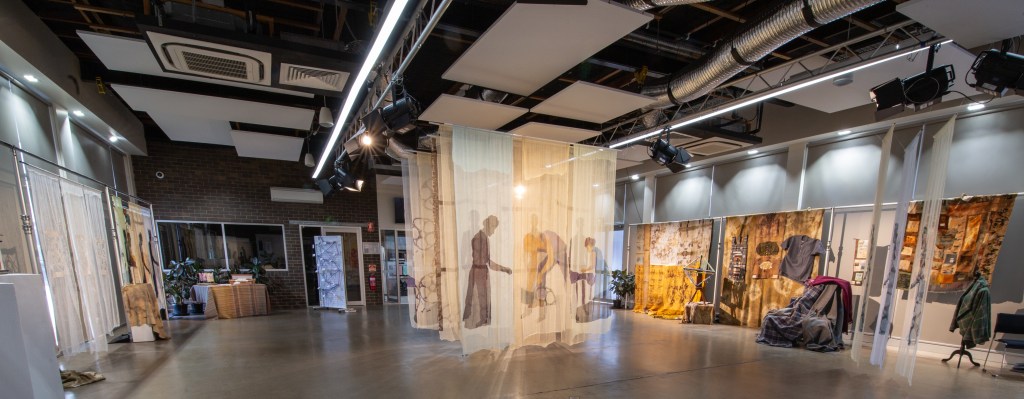
Four types of areas emerged.
Firstly there were Deborah’s scrims, drawn from archival images and stencilled onto floaty cheesecloth, that formed the core of the exhibition adding life and movement.


Secondly there were the artists original pieces, inspired by Deborah’s process, created in a couple of weeks. These were teasers for what might be formed for a full exhibition at the state listed former mill. Still, they were serious pieces of art.

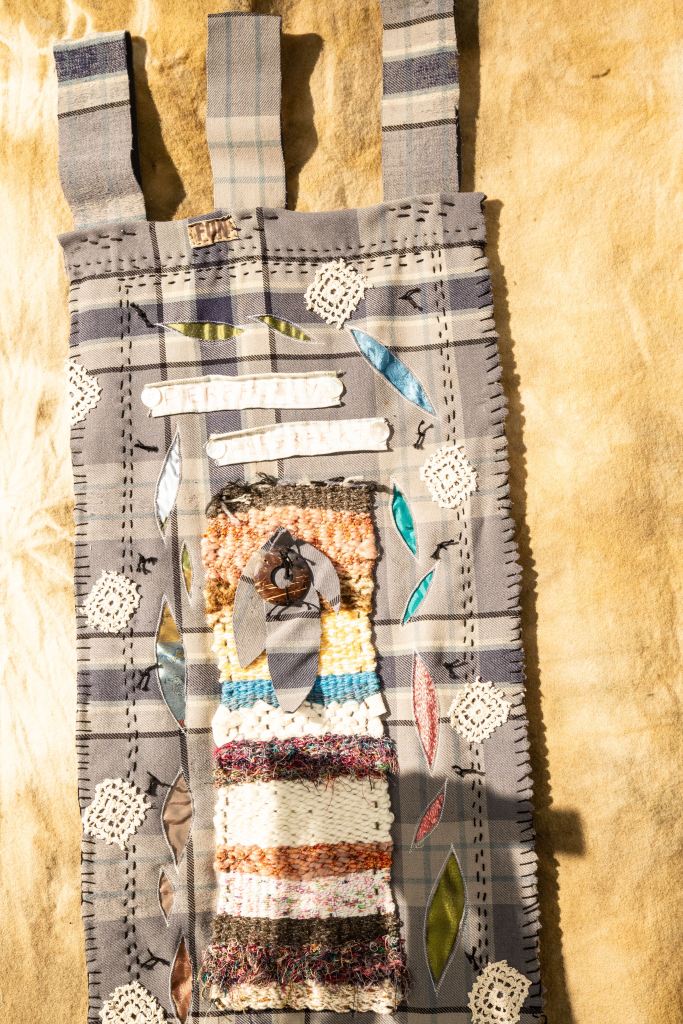

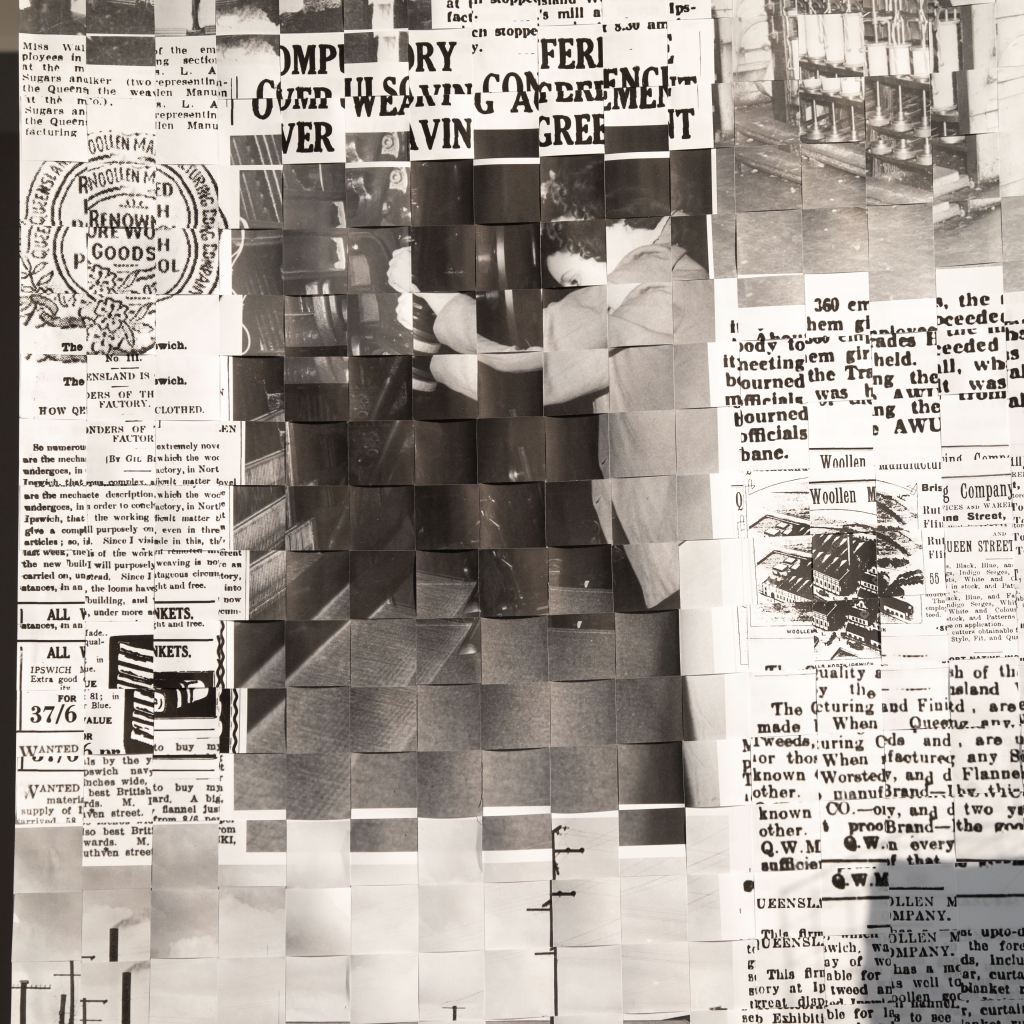
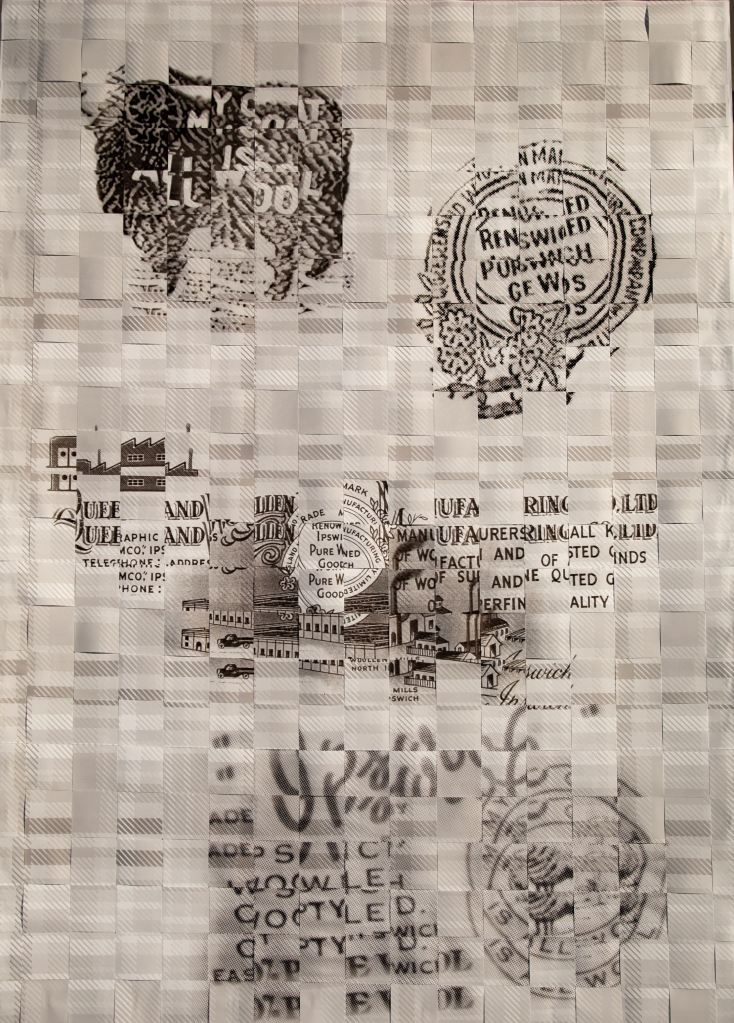


Thirdly there were the mill artefacts. Blankets, books fabrics and mill objects, were leant for the time.
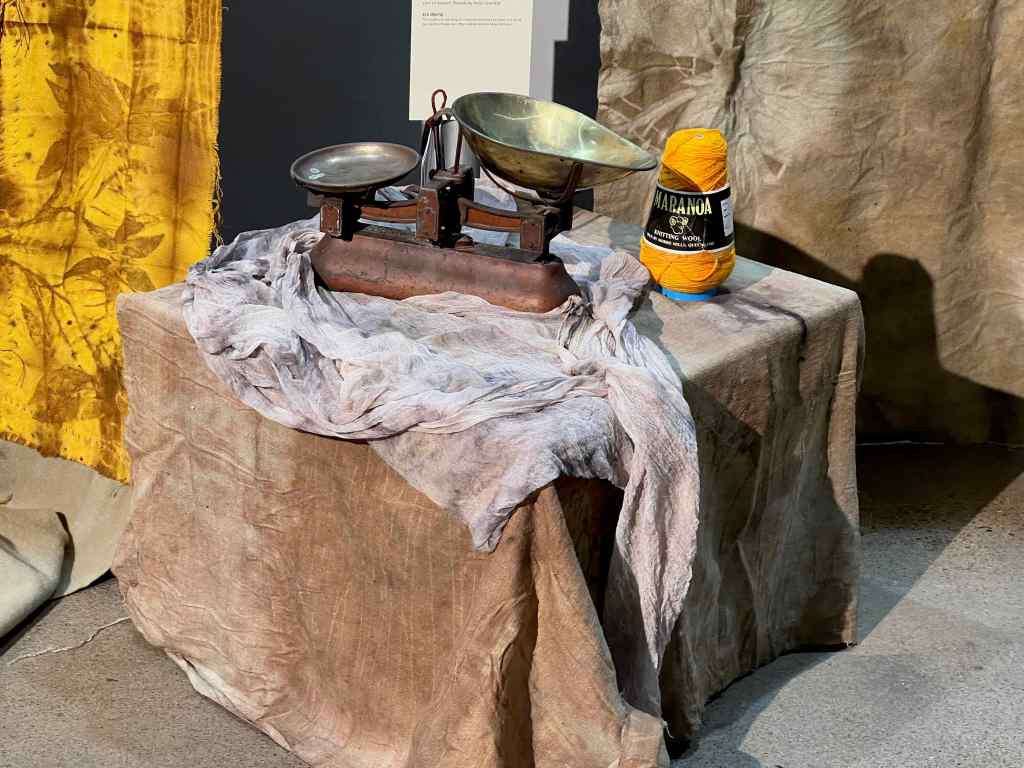
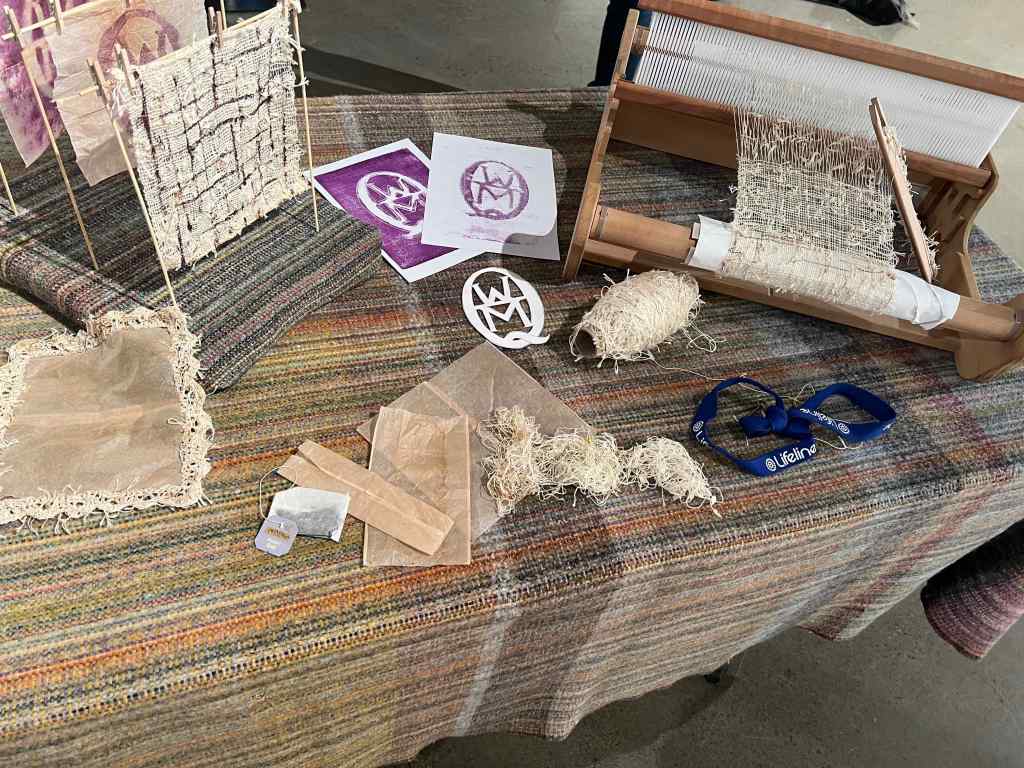


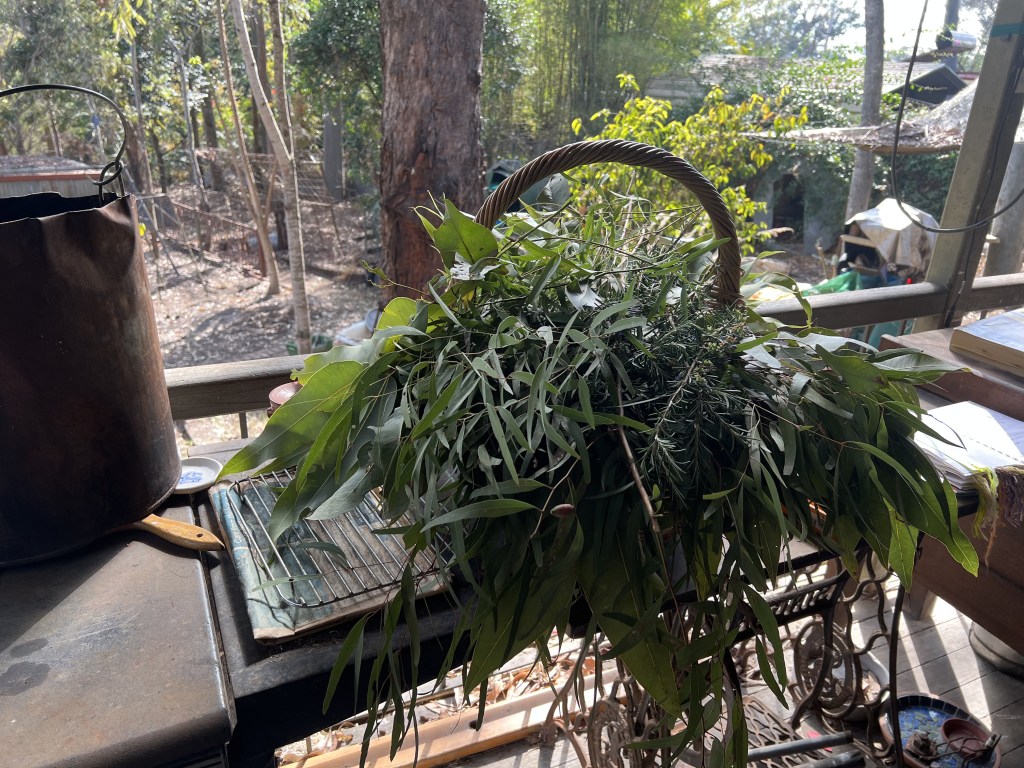
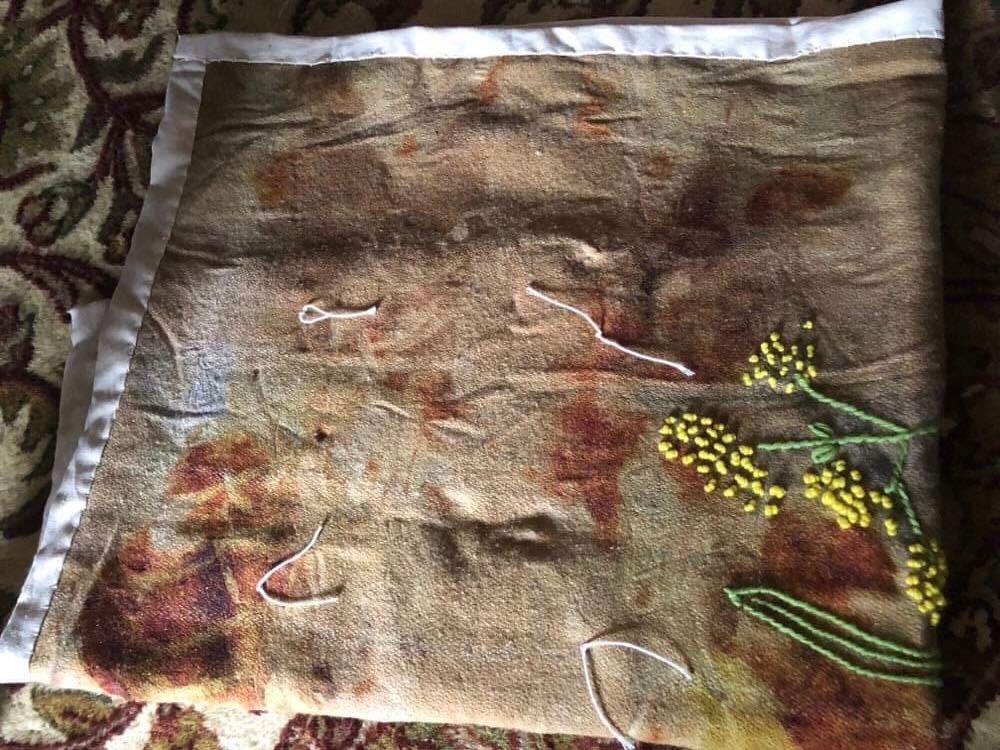
Finally there was the up-cycling of artefacts, and eco dyeing – ways to re-energise memories and objects of the past.


These gallery pages will show off these pieces, and present the artists who created them.
So many hands helped to create, install and take-down. Ipswich Threads was a genuine community effort, and of an exceptional standard.
 Parallel Threads - Entangled Ends
Leave a comment